The House
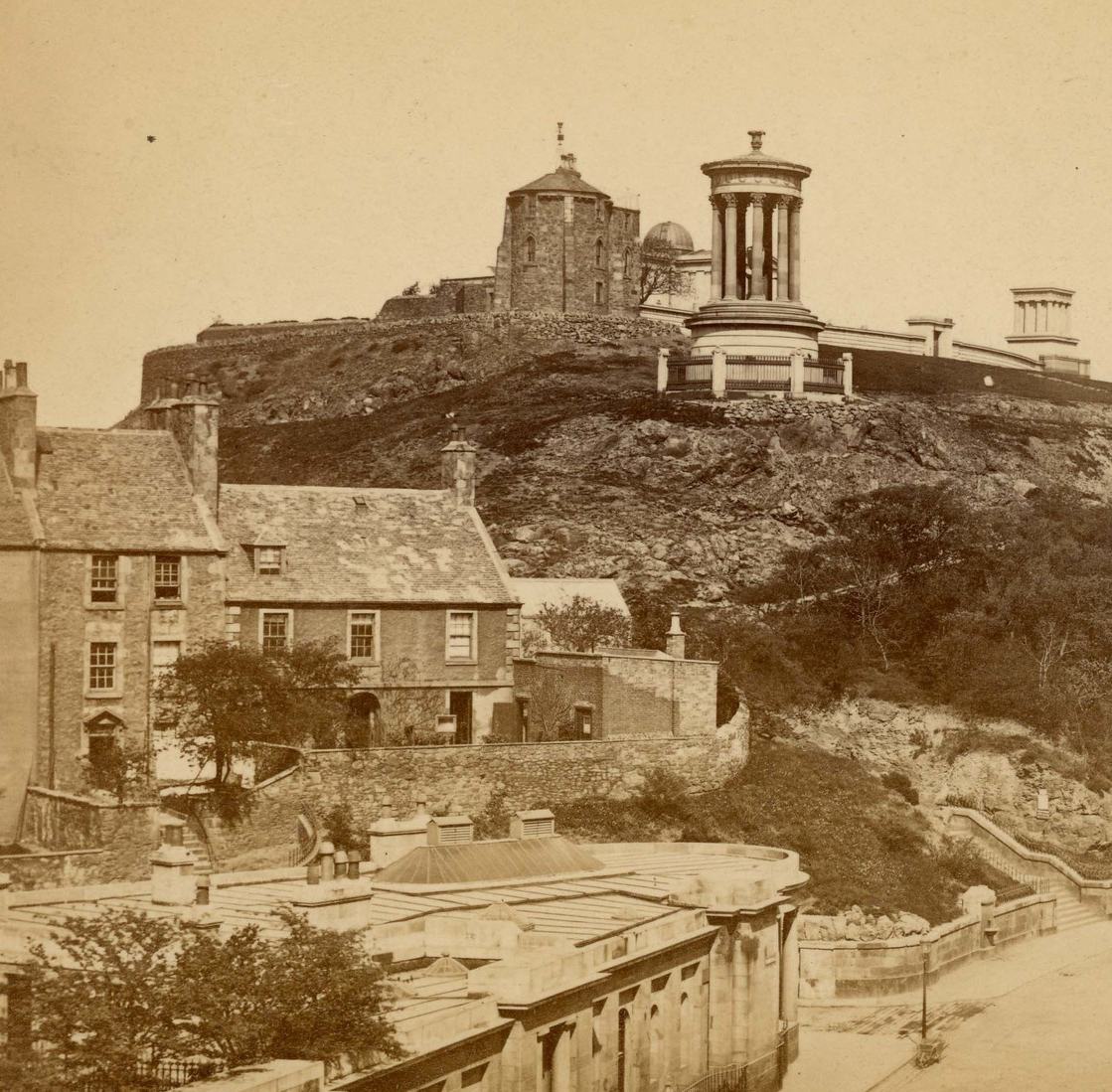
A landmark house at the foot of Calton Hill, built in the 1750s and, from 1843, the studio where David Octavius Hill and Robert Adamson made photography an art.
Rock House was built in the 1750s and is reputed to be one of the oldest houses in Edinburgh’s New Town. It stands in a secluded position at the foot of Calton Hill, set back from the street behind its own gate, with a terrace that looks out over the rooftops of the Old and New Towns to the Castle beyond. Few houses in the city hold a view like it, and fewer still can claim to have changed the course of an entire art form.
The house owes its wider fame to what happened here in 1843, when it became the base for the first photography studio in Scotland. What began as one man’s attempt to solve a practical problem, recording a historic gathering of hundreds of ministers, became instead one of the founding chapters of photography as art. The partnership that formed at Rock House lasted barely four years, but the pictures it produced are still held in the national collections and still studied today.
This page sets out that history as it is known, from the building of the house through the working life of its studio to its recent restoration and the guests who stay here now.
1750s to Today
The key dates in the life of the house, its studio and the people who worked here.
Rock House is built on Calton Hill, in a secluded position at the foot of the hill overlooking the city. It is reputed to be one of the oldest houses in Edinburgh’s New Town.
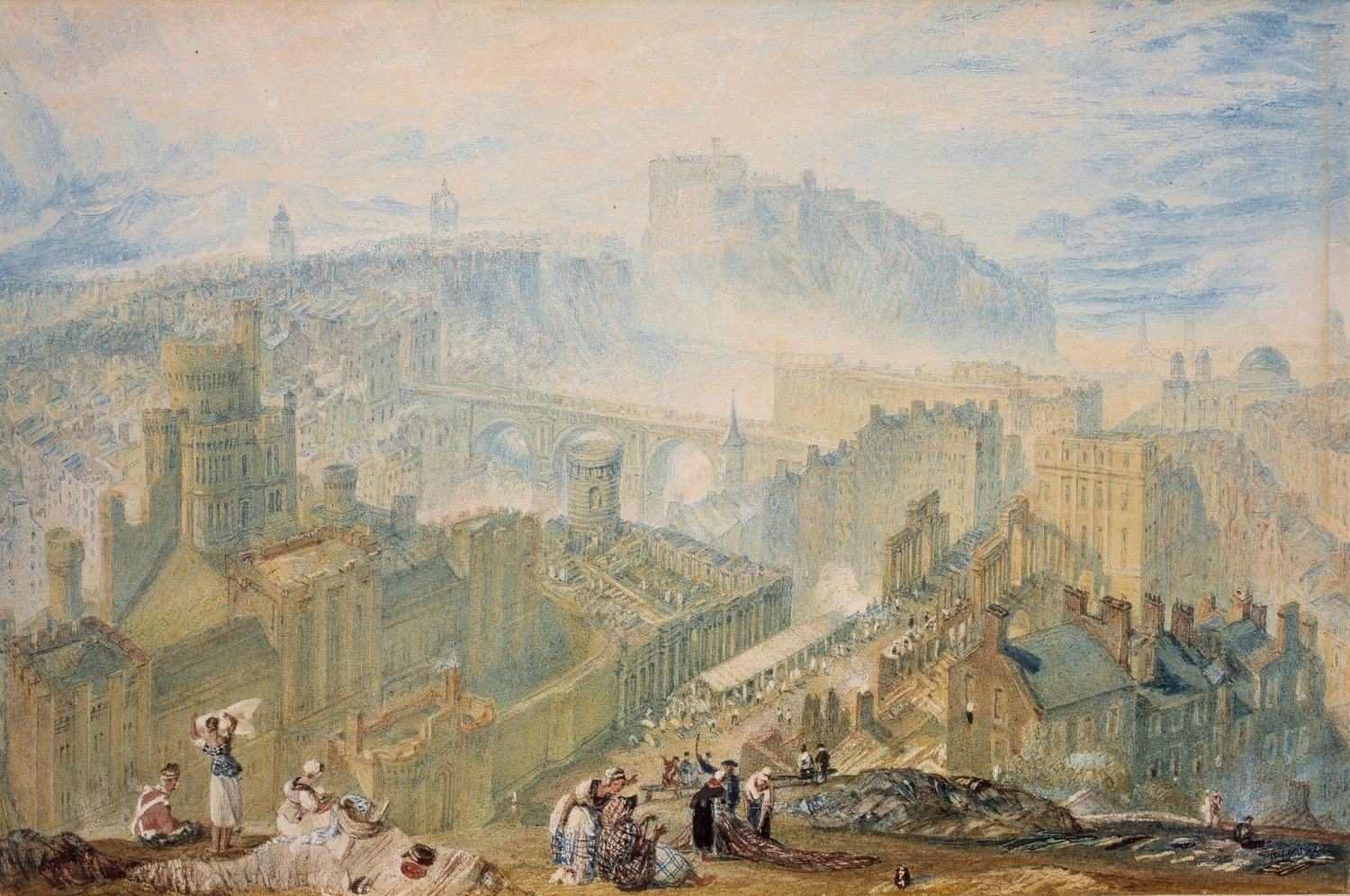
By William Turner
Over 450 ministers walk out of the Church of Scotland General Assembly to found the Free Church of Scotland, an event known as the Disruption. The painter David Octavius Hill decides to record the scene. The physicist Sir David Brewster suggests photography as a way of gathering the likenesses he needs, and introduces Hill to the young engineer Robert Adamson.
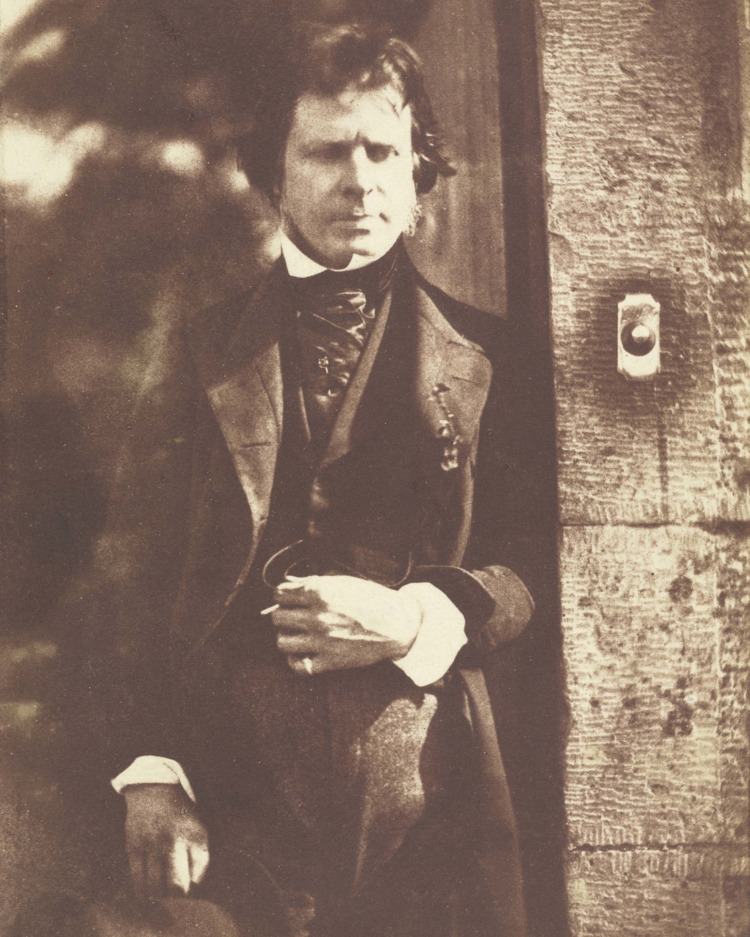
Courtesy of the Scottish National Portrait Gallery
Hill and Adamson form Hill & Adamson, the first photography studio in Scotland, based at Adamson’s studio, Rock House, on Calton Hill. Their calotypes are praised immediately: in November 1843 the watercolourist John Harden writes that the pictures are “as Rembrandt’s but improved”.
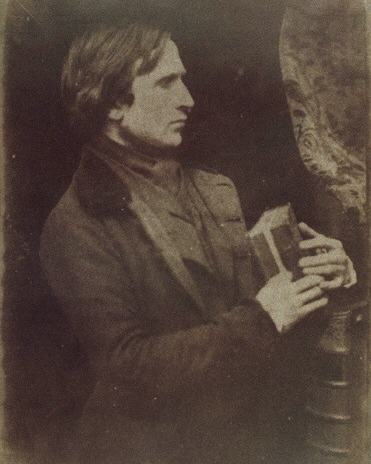
Courtesy of the Scottish National Portrait Gallery
Jessie Mann, assistant to Hill and Adamson at Rock House, is thought to have made the 1844 photograph of the King of Saxony taken at the studio. She is a strong candidate for the first Scottish woman photographer.
On 2 May 1845, Hill and Adamson photograph the Scott Monument while it is still under construction, one of many Edinburgh subjects the partnership turns its camera on, alongside Greyfriars Kirkyard and the soldiers of the garrison.
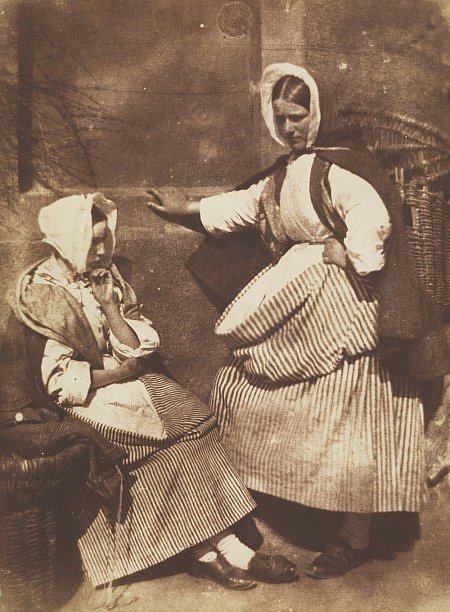
In under four years the partnership produces around 3,000 calotypes, among them Scottish luminaries, soldiers and, most enduringly, the fisherfolk and fishwives of Newhaven. The body of work is widely held to be the first substantial collection of self-consciously artistic photography ever made.
By Hill & Adamson
Robert Adamson dies young, and the partnership ends with him. Hill abandons the studio at Rock House several months later.
Eighteen years after Adamson’s death, Hill finally completes the painting that started it all: a canvas five feet by eleven feet four inches, recording the 1843 Disruption he had set out to capture with Adamson’s help.
David Octavius Hill dies, having outlived his partner by more than two decades and finally seen the Disruption painting through to completion.
The photographer Archibald Burns works from Rock House, continuing the studio’s working life through the 1860s and 1870s.
Alexander Adam Inglis takes over the studio at Rock House, followed in time by Francis Caird Inglis, keeping the house in continuous photographic use.
Rock House finally closes as a working photographer’s studio in the 1950s, after more than a century of continuous use since the 1840s. A plaque on the front of the house still commemorates the Hill & Adamson partnership.
Rock House is carefully renovated and prepared to welcome guests once again, its historic character kept intact alongside modern comfort.
The Edinburgh-born painter Alastair Gordon, who teaches at Leith School of Art, takes up the first Rock House artist residency. He produces Rock, Silver and Salt, a series named for the chemistry of the calotype, drawing on the 17th-century quodlibet technique and on drawings made in the Old Calton burial ground below the house.
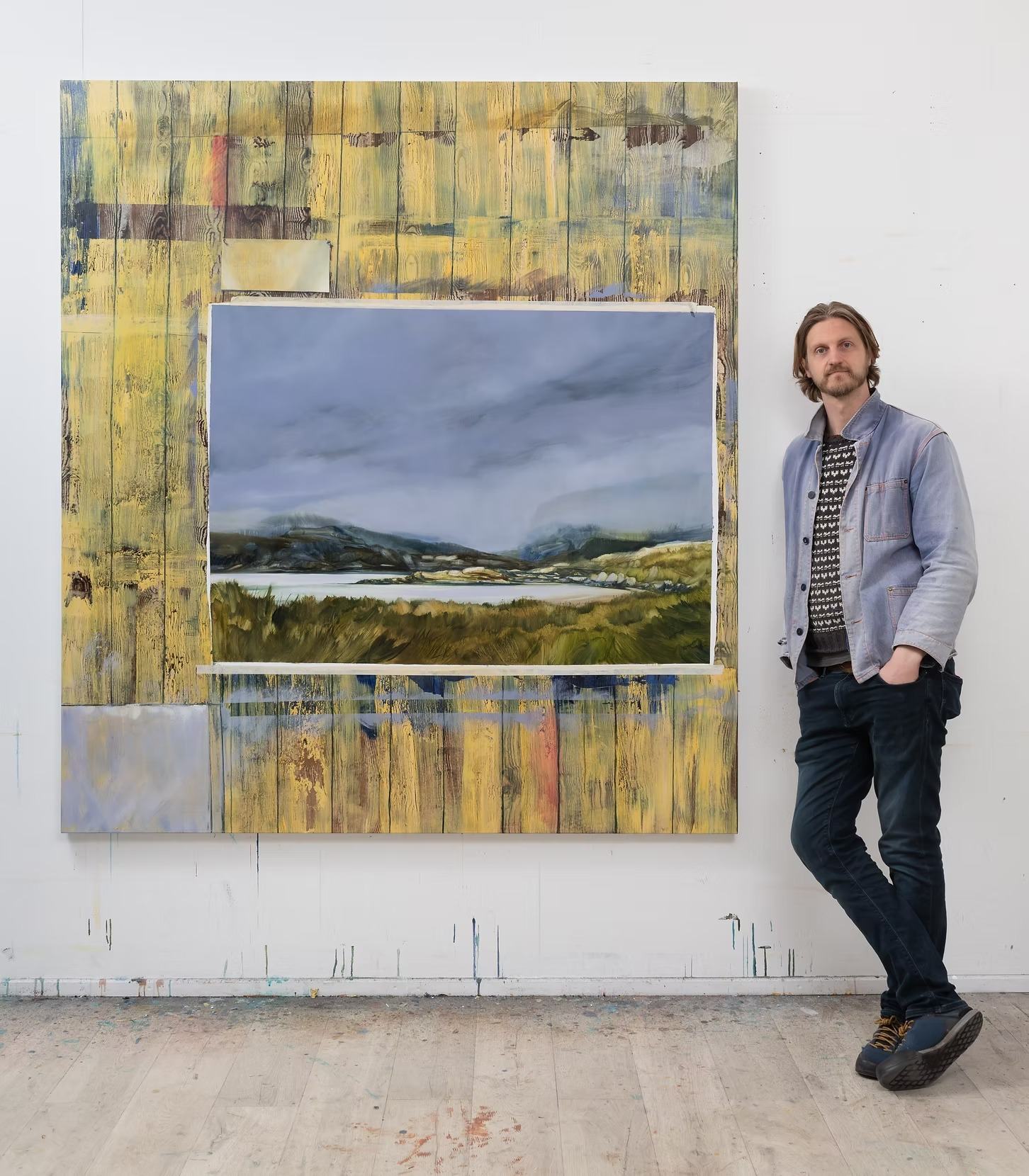
Rock House now welcomes guests as three self-catering stays: Rock House itself, the Terrace Apartment and the Photographer’s Studio, a name that keeps its history close at hand for everyone who stays here.
The calotype was one of photography’s earliest processes, invented by the English scientist William Henry Fox Talbot and announced to the world in 1839, the same year the Scottish physicist Sir David Brewster was among those experimenting with the new medium. Unlike the daguerreotype, which produced a single, mirror-sharp image on a metal plate, the calotype used a paper negative that could be printed again and again. The paper’s texture softened every edge, giving calotype portraits a quality closer to a drawing or a mezzotint than to the crisp precision of later photography.
That softness suited Hill and Adamson perfectly. Hill was a painter first, and he brought a painter’s eye for composition, light and gesture to a technical process that most of its early practitioners treated as a scientific curiosity. Rock House gave them what the calotype demanded: an elevated position on Calton Hill, open to the sky, with the steady daylight that long exposures required. Sitters had to hold still for the better part of a minute, and the resulting portraits have a quiet, unguarded stillness that faster processes could never quite repeat.
It is this combination, Hill’s artistic sensibility and Adamson’s technical skill, working from a studio built for the light it commanded, that historians point to when they call the Rock House partnership the first substantial body of self-consciously artistic photography. The subjects ranged from Free Church ministers to the fishwives of Newhaven, but the intent was consistent throughout: photography treated not as a record, but as a picture.
Stay Here
Rock House, the Terrace Apartment and the Photographer’s Studio all sit within the same historic walls on Calton Hill.
View AccommodationsGood to Know
The calotype was an early photographic process using a paper negative, invented by William Henry Fox Talbot and announced in 1839. Unlike the sharp, one-off daguerreotype, a calotype negative could be used to print multiple copies, and its soft, textured quality gave the images a painterly character that set Hill and Adamson’s work apart.
In 1843 the painter David Octavius Hill and the young engineer Robert Adamson founded Hill & Adamson, the first photography studio in Scotland, based at Rock House on Calton Hill. In under four years they produced around 3,000 calotypes, widely regarded as the first substantial body of self-consciously artistic work made in the new medium.
The original calotypes are held in museum and archive collections, including the Scottish National Portrait Gallery. Rock House itself is the studio where they were made, and a plaque on the front of the house commemorates the partnership.
Rock House remained in continuous use as a photographer’s studio from the 1840s until the 1950s. It has since been carefully restored and is now let to guests as three self-catering stays.
In 2017 the Edinburgh-born painter Alastair Gordon, who teaches at Leith School of Art, took up the first Rock House artist residency. He produced a series called Rock, Silver and Salt, named for the chemistry of the calotype, drawing partly on the 17th-century quodlibet technique and on observations made in the Old Calton burial ground below the house.
Rock House is a private house let exclusively to guests staying in one of its three accommodations. The best way to experience its history is to book a stay.